
Power Cord & Light Switch Lockout Devices: Simple Isolation for Low-Voltage Equipment

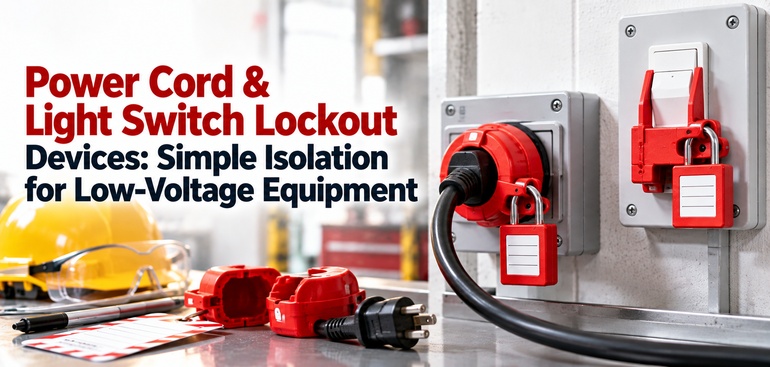
Electrical maintenance does not always involve large industrial machines or complicated power systems. Everyday low-voltage equipment such as portable tools, office appliances, lighting systems, laboratory devices, and small machinery can also create risks when power is restored unexpectedly during servicing. This is where power cord and light switch lockout devices provide a simple and practical way to control access to an energy source.
These devices help prevent accidental operation by physically restricting a plug, switch, or other point of electrical isolation. When used as part of a proper lockout/tagout (LOTO) procedure, they can make maintenance areas easier to manage and help workers clearly understand that equipment must remain de-energized.
For businesses operating across different industries and locations worldwide, choosing suitable electrical lockout equipment is an important part of building a consistent workplace safety program. Lukko Safety provides lockout solutions designed to support safer isolation practices for a wide range of applications.
What Are Power Cord & Light Switch Lockout Devices?
Power cord and light switch lockout devices are safety products used to prevent electrical equipment from being energized or operated while maintenance, inspection, cleaning, or repair work is taking place.
A power cord lockout device is generally designed to secure a plug or cord so it cannot be connected to a power source without authorization. A light switch lockout device restricts access to a switch, helping prevent someone from turning a circuit back on while work is underway.
The exact device required depends on the equipment, switch design, workplace procedure, and applicable electrical safety requirements.
OSHA describes lockout as placing a lockout device on an energy-isolating device so that the equipment cannot be operated until the device is removed.
Why Is Electrical Isolation Important?
Unexpected energization is a serious concern during maintenance. A worker may believe equipment is safely switched off, while another person may unknowingly restore power.
A visible and physical lockout provides an additional barrier against this type of mistake.
Effective electrical isolation can help:
- Prevent accidental switching or reconnection
- Make maintenance activities more visible to other employees
- Support workplace lockout/tagout procedures
- Reduce the possibility of unexpected equipment operation
- Create a consistent approach to energy control
- Improve communication between maintenance teams and other workers
OSHA's hazardous-energy requirements call for procedures that address shutdown, isolation, application of lockout/tagout devices, stored energy, and verification of isolation where the standard applies.
Power Cord Lockout Devices for Low-Voltage Equipment
Many low-voltage appliances and portable electrical tools are powered through a standard cord and plug. During servicing, simply switching the equipment off may not always provide the desired level of control.
A suitable power cord lockout device can help secure the plug and prevent unauthorized reconnection.
Common applications include:
- Portable power tools
- Cleaning equipment
- Office appliances
- Laboratory equipment
- Maintenance tools
- Small electrical machines
- Temporary electrical equipment
However, the appropriate procedure depends on the workplace and equipment. OSHA provides an exception for certain cord-and-plug equipment when unplugging the equipment and maintaining exclusive control of the plug effectively prevents unexpected energization.
This means organizations should not automatically assume that every unplugged device requires the same lockout approach. Their written energy-control procedures and applicable electrical safety requirements should determine the correct method.
Light Switch Lockout Devices: A Simple Physical Barrier
A wall switch can appear harmless, but it may control lighting circuits or equipment that workers are servicing. If another employee switches it on without realizing maintenance is taking place, the situation can become dangerous.
Light switch lockout devices are designed to prevent or restrict operation of compatible switches during maintenance.
They can be useful in environments such as:
- Commercial buildings
- Manufacturing facilities
- Warehouses
- Hotels
- Hospitals and healthcare facilities
- Laboratories
- Educational institutions
- Construction and maintenance sites
OSHA has specifically addressed situations involving light switches and electrical work, noting that electrical safety requirements can apply even when a worker has direct sight of the switch.
The key point is simple: turning something off is not necessarily the same as physically securing the energy-isolating point.
How Do These Lockout Devices Work?
Although designs vary, the basic principle is straightforward.
1. Identify the Energy Source
Before starting work, determine which electrical source supplies the equipment or circuit. Understand the type and magnitude of energy involved.
2. Shut Down the Equipment
Turn off the equipment using the established shutdown procedure. An orderly shutdown can help avoid additional hazards.
3. Isolate the Energy
Disconnect or isolate the appropriate electrical source according to the site's energy-control procedure.
4. Apply the Lockout Device
Install the compatible power cord lockout, switch lockout, or another appropriate isolation device.
5. Apply the Personal Lock and Tag
Where required by the workplace LOTO procedure, the authorized employee applies the appropriate lock and identification tag.
6. Verify Isolation
Before beginning work, verify that the equipment has actually been de-energized. OSHA identifies verification of isolation as a required step in covered lockout/tagout procedures.
7. Complete the Maintenance
Only after the isolation has been properly established and verified should servicing begin.
Power Cord Lockout vs. Light Switch Lockout
Feature | Power Cord Lockout | Light Switch Lockout |
Main purpose | Prevents plug reconnection | Prevents switch operation |
Typical application | Portable or cord-connected equipment | Wall-mounted switches |
Suitable for | Tools, appliances, small equipment | Lighting and compatible electrical circuits |
Main benefit | Controls access to the plug | Restricts accidental switch activation |
Selection factor | Plug and cord design | Switch configuration |
The correct choice should always be based on the actual equipment and the organization's energy-control procedure rather than simply choosing the most convenient device.
What Should You Look for When Choosing Electrical Lockout Equipment?
Not every lockout device will fit every application. Before purchasing, consider:
Compatibility
Check whether the device is designed for the particular plug, cord, switch, or electrical component.
Durability
Lockout hardware should be capable of handling the environment where it will be used. OSHA requires applicable lockout/tagout devices to be durable and substantial enough to resist accidental or unauthorized removal.
Visibility
A clearly visible lockout device makes it easier for workers to recognize that equipment is under maintenance.
Ease of Use
Maintenance teams should be able to install and remove the device according to established procedures without unnecessary complexity.
Identification
Lockout systems should support clear identification of the person responsible for applying the lock or tag, as required by applicable procedures.
Why Choose Lukko Safety for Lockout Solutions?
For organizations looking for power cord and light switch lockout devices, product selection is only one part of the safety process. Devices need to work with the equipment, fit workplace procedures, and be suitable for the operating environment.
Lukko Safety focuses on practical lockout solutions that help organizations establish clear and controlled energy-isolation practices. With applications spanning different workplaces and industries, the goal is to make electrical isolation simpler, more visible, and easier for maintenance teams to manage.
Whether you need solutions for portable electrical equipment, switches, or broader lockout/tagout requirements, Lukko Safety can help you identify suitable options for your application.
Conclusion
Power cord and light switch lockout devices offer a straightforward way to improve control over electrical energy during maintenance and servicing. By physically restricting plugs or switches, they can make isolation more visible and help reduce the risk of accidental re-energization when used correctly within an established safety program.
For organizations operating worldwide, having reliable and compatible lockout equipment is an important part of consistent workplace safety. Explore practical electrical isolation solutions from Lukko Safety and choose the right lockout devices for your equipment, procedures, and working environment.
Frequently Asked Questions
Power cord lockout devices help prevent a plug from being reconnected to an electrical supply during maintenance or servicing. They are commonly used with compatible cord-and-plug equipment where physical control of the connection is part of the site’s energy-isolation procedure.
A light switch lockout device is designed to restrict operation of a compatible electrical switch. It helps prevent another person from turning a switch on while maintenance or electrical work is being performed.
Low voltage does not automatically mean there is no electrical hazard. The appropriate isolation method depends on the equipment, work being performed, applicable regulations, and workplace safety procedures.
No. Plug shapes, sizes, and designs differ. A power cord lockout should be selected based on compatibility with the particular plug and equipment.
Verification confirms that the intended energy source has actually been isolated before work begins. It is an important part of covered lockout/tagout procedures and should be performed according to the organization’s established process.
