
Group Lockout Box vs Individual Locks: When Do You Need Each?

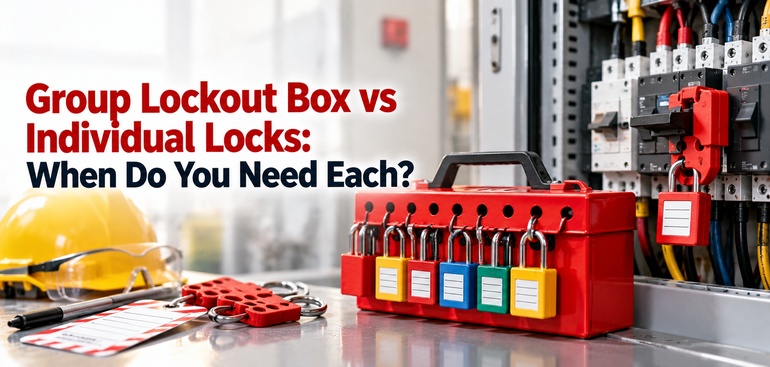
Workplace maintenance and repair jobs often involve more than one person working around the same hazardous energy source. In such situations, choosing the right lockout device can make a major difference to worker safety. Two commonly used options are group lockout boxes and individual locks, but they serve different purposes.
An individual lock is generally suitable when one authorized employee is working on equipment and needs personal control over the energy isolation point. A group lockout box, on the other hand, is designed for situations where several workers or teams need protection during the same maintenance activity. Understanding when to use each option can help organizations create safer lockout/tagout procedures while reducing the risk of accidental equipment startup. This guide from Lukko Safety explains the key differences and practical uses of both systems.
What Is an Individual Lock?
An individual lock is a personal safety lock used by an authorized employee during lockout/tagout (LOTO) procedures. The employee places the lock on an energy-isolating device, such as a circuit breaker, valve, or disconnect switch, to prevent the equipment from being energized while work is being performed.
The most important feature is personal control. The person who applies the lock should be able to identify it and retain control of its key.
When Should You Use an Individual Lock?
Individual locks are generally appropriate when:
- One authorized employee is performing maintenance.
- A single energy source needs to be isolated.
- The worker can safely apply and remove the lock themselves.
- The job does not involve multiple workers requiring simultaneous protection.
- A company’s LOTO procedure permits personal lockout for the task.
For example, an electrician servicing a standalone machine may isolate the electrical supply and apply their personal safety lock. The equipment remains locked until the electrician has completed the work and safely removed the lock.
What Is a Group Lockout Box?
A group lockout box is designed to help protect multiple authorized workers during a single lockout operation. Instead of every worker placing a separate lock directly on the energy-isolating device, the primary isolation key or keys can be secured inside a lockout box.
Each authorized worker then applies their own personal lock to the group lockout box. As long as any worker's personal lock remains attached, access to the isolation key remains restricted.
This arrangement can be particularly useful for large maintenance projects involving several employees, contractors, or departments.
Group Lockout Box vs Individual Locks
Although both options support safe energy isolation, they are not interchangeable in every situation.
Feature | Individual Lock | Group Lockout Box |
Best for | One worker | Multiple workers |
Personal control | Direct | Through personal lock on box |
Multiple workers | Less convenient | Designed for group work |
Complex maintenance | May be difficult to manage | Easier to coordinate |
Key management | Individual key | Isolation keys secured in box |
Team protection | Limited to individual application | Supports coordinated group lockout |
The right choice depends mainly on the number of people involved, the complexity of the work, and the organization's established LOTO procedure.
When Do You Need Individual Locks?
An individual lock is usually the simpler choice for straightforward maintenance tasks. If one authorized worker is responsible for the job and can safely control the isolation point, there may be no need for a group lockout box.
For instance, consider a technician repairing a conveyor motor. The technician isolates the relevant electrical supply, verifies that hazardous energy has been controlled, and applies their personal lock. Since no other employee is working under the same isolation, an individual lock may be suitable.
However, organizations should always follow their own documented procedures and applicable workplace safety requirements.
When Do You Need a Group Lockout Box?
A group lockout box becomes especially useful when multiple authorized employees are working under the same energy isolation.
Imagine a production line undergoing scheduled maintenance. An electrician may be handling the electrical system, a mechanical technician may be repairing moving components, and another specialist may be inspecting the equipment. Each person needs assurance that the machine cannot be restarted while they are working.
A group lockout box allows the isolation to be coordinated centrally while giving every worker personal control over their protection.
Common Applications
Group lockout boxes can be useful during:
- Large equipment shutdowns
- Plant maintenance projects
- Production-line servicing
- Turnaround and shutdown activities
- Construction and commissioning work
- Multi-team mechanical and electrical maintenance
- Jobs involving contractors and company employees
Why Personal Locks Still Matter in Group Lockout
Using a group lockout box does not mean workers should share one safety lock. In a properly managed group lockout system, each authorized worker should have their own identifiable personal lock.
This provides an important layer of accountability. A worker can remove their own lock when they have finished their part of the job, while the equipment remains protected by the locks belonging to other workers.
A clear identification system can also help supervisors understand who is still working under the lockout.
How to Choose the Right Lockout Method
Before selecting a lockout device, consider these questions:
- How many people are working on the equipment?
A single worker may only need an individual lock, while a larger team may benefit from a group lockout box. - How many energy sources are involved?
Multiple electrical, hydraulic, pneumatic, or mechanical energy sources can make group lockout procedures more practical. - Is the job complex or extended?
Longer shutdowns involving several teams generally require stronger coordination. - What does your LOTO procedure require?
Always follow your organization's documented lockout/tagout process and applicable regulations. - Can every worker maintain personal control?
Each employee should have a clear method of confirming that their protection remains in place.
Safety Tips for Group and Individual Lockout
Regardless of the method selected, effective lockout/tagout depends on proper procedure. Workers should identify hazardous energy sources, shut down equipment correctly, isolate the energy, apply the required lockout devices, and verify that the equipment is actually de-energized before work begins.
Training is equally important. Employees should understand how lockout devices work, when they must be used, and what steps are required before equipment can be returned to service.
Using high-quality equipment from a reliable safety supplier can also support consistent workplace practices. Lukko Safety offers lockout solutions designed for different industrial safety requirements and applications.
Conclusion
Choosing between a group lockout box vs individual locks depends largely on the nature of the maintenance work and the number of people involved. Individual locks are generally practical for single-worker tasks, while group lockout boxes provide a structured way to protect multiple workers working under the same energy isolation.
The goal in either case is the same: prevent unexpected energization and give workers reliable control over their personal safety. By selecting appropriate lockout equipment, following established LOTO procedures, and providing proper employee training, organizations can create safer maintenance environments. For dependable lockout/tagout solutions for workplaces worldwide, explore the safety solutions offered by Lukko Safety.
Frequently Asked Questions
An individual lock is normally used by one authorized worker to secure an energy-isolating point. A group lockout box is designed to coordinate protection for several workers working under the same energy isolation. Each worker can apply their personal lock to the box.
Yes, multiple workers may use individual locks as part of an appropriate lockout procedure. However, for complex jobs involving several energy sources or teams, a group lockout box can make key control and coordination more organized.
In a properly designed group lockout procedure, each authorized worker should have their own identifiable personal lock. This allows every worker to maintain individual control over their protection while working.
A group lockout box is particularly useful when several authorized employees or teams are working on the same equipment or energy-isolation system. It can simplify coordination during large maintenance and shutdown projects.
They can be useful when contractors and company employees are working together under the same isolation, provided the site’s lockout/tagout procedure clearly defines responsibilities, lock ownership, and authorization.
