
LOTO Kit Buying Guide: How to Choose the Right Electrical Lockout Tagout Kit

Electrical maintenance and servicing work can expose workers to serious risks if equipment is accidentally energized or restarted. A properly selected LOTO kit helps workers isolate electrical energy before maintenance begins, reducing the possibility of unexpected startup and electrical incidents. However, choosing the right kit is not simply about buying the largest set available. The kit should match your equipment, electrical isolation points, workplace conditions, number of authorized employees, and lockout procedures.
A good electrical lockout tagout kit brings the necessary locks, tags and isolation devices together in an organized package, making LOTO procedures easier to follow. OSHA's hazardous energy standard also requires employers to provide suitable lockout/tagout hardware and establish procedures for controlling hazardous energy.
For businesses operating across different countries and industries, the right approach is to select equipment based on actual workplace requirements and applicable local safety regulations. Here is a practical guide to help you make an informed buying decision.
What Is a LOTO Kit?
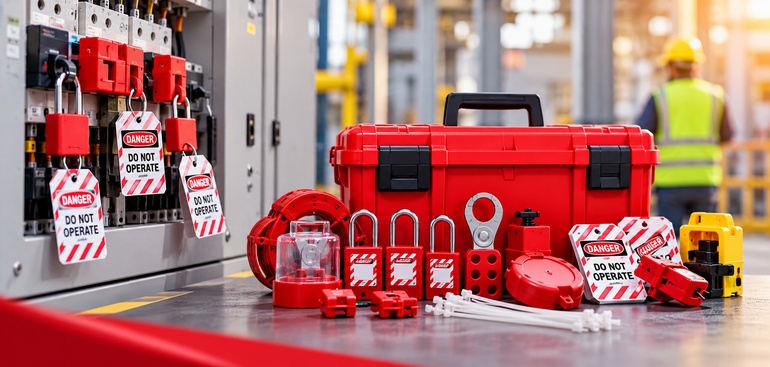
A Lockout Tagout (LOTO) kit is a collection of safety devices used to isolate and identify hazardous energy sources during equipment servicing and maintenance. Depending on the application, a kit may contain safety padlocks, warning tags, breaker lockouts, electrical plug lockouts, hasps, cable lockouts and other accessories.
The purpose is straightforward: prevent an isolated energy source from being accidentally operated while authorized personnel are working on the equipment.
OSHA describes lockout as using a device to hold an energy-isolating device in a safe position, while tagout uses a prominent warning device to indicate that the equipment must not be operated.
Why Choosing the Right Electrical Lockout Tagout Kit Matters
Every workplace has different electrical systems and maintenance requirements. A kit suitable for a small workshop may not be adequate for a large manufacturing facility.
The right kit can help you:
- Isolate electrical energy more effectively
- Keep essential LOTO equipment organized
- Reduce delays during maintenance
- Support consistent workplace procedures
- Provide visible warnings around isolated equipment
- Improve accessibility of safety devices for authorized employees
Importantly, purchasing a LOTO kit should complement, not replace, a properly implemented energy-control program. OSHA requires appropriate procedures, training and periodic inspections alongside the use of lockout/tagout hardware.
How to Choose the Right LOTO Kit
1. Identify Your Electrical Isolation Points
Start by examining the equipment that your maintenance teams regularly service. Identify the types of electrical isolation points used throughout the facility.
These may include:
- Circuit breakers
- Disconnect switches
- Electrical plugs
- Panel switches
- Main electrical isolators
- Specialized electrical equipment
A kit should contain devices that physically fit the isolation points you actually use. Buying numerous accessories that cannot be applied to your equipment can increase cost without improving safety.
2. Check the Kit Components
Before purchasing, review every item included in the kit rather than judging it by its total piece count.
A useful electrical LOTO kit may include:
Component | Typical Purpose |
Safety padlocks | Secure an isolated energy source |
Lockout tags | Provide visible warnings and identification |
Breaker lockouts | Secure compatible circuit breakers |
Plug lockouts | Prevent unauthorized reconnection of plugs |
Lockout hasps | Allow multiple authorized workers to apply locks |
Cable lockouts | Help secure suitable isolation mechanisms |
Storage pouch or case | Keeps equipment organized and accessible |
The exact combination should depend on the equipment and procedures at your facility. A 30-piece kit is not automatically better than a smaller kit if many of those components are unsuitable for your applications.
3. Consider the Number of Authorized Employees
The number of people carrying out maintenance is another important consideration.
If several authorized employees may work on the same equipment, you may need multiple personal safety locks and suitable group lockout equipment. OSHA's requirements for group lockout include arrangements that provide protection equivalent to personal lockout, with each authorized employee applying their personal lock to the group lockout mechanism.
For larger teams, consider:
- Number of authorized employees
- Number of simultaneous maintenance jobs
- Number of personal locks required
- Group lockout requirements
- Lockbox or group isolation arrangements
4. Choose Durable Materials
Industrial environments can expose LOTO equipment to dust, moisture, chemicals, temperature changes and rough handling. Therefore, durability matters.
Look for locks and accessories designed for the conditions in which they will be used. Tags should remain readable, and lockout devices should withstand the expected workplace environment. OSHA specifically requires lockout/tagout devices to be durable and suitable for the conditions in which they are used.
For outdoor, humid or harsh industrial environments, pay particular attention to material selection and resistance to corrosion or environmental exposure.
5. Check Lock and Key Management
A LOTO program can become difficult to manage when multiple workers and locks are involved. Before purchasing, decide how locks will be assigned and controlled.
Consider whether you need:
- Individually assigned locks
- Keyed-different locks
- Keyed-alike options where appropriate
- Clearly identifiable lock colors
- Employee identification on locks or tags
- A centralized storage system
The objective is to make ownership clear and prevent confusion during maintenance.
6. Select Clear and Durable Tags
Tags are an important part of the LOTO system because they communicate that equipment must not be operated.
Choose tags that are:
- Easy to read
- Clearly worded
- Durable
- Suitable for the work environment
- Securely attachable
- Capable of identifying the responsible employee
OSHA states that tags must be legible, understandable and able to withstand workplace conditions.
Remember that a tag is primarily a warning device and does not provide the same physical restraint as a lock.
Common Mistakes When Buying a LOTO Kit
Avoid choosing a kit solely because it has a low price or a high number of components.
Common purchasing mistakes include:
- Buying without checking equipment compatibility
- Selecting too few personal locks
- Ignoring group lockout requirements
- Choosing unsuitable materials for harsh environments
- Purchasing unnecessary accessories
- Overlooking tag quality and readability
- Failing to consider storage and accessibility
A practical buying decision should begin with your energy-control procedures and equipment inventory rather than the kit's advertised piece count.
LOTO Kit Selection: Quick Checklist
Before placing an order, ask:
- Does the kit cover our electrical isolation points?
- Are the breaker and plug lockouts compatible with our equipment?
- Are enough personal locks included?
- Do we need hasps or group lockout devices?
- Are the tags durable and easy to understand?
- Can the equipment withstand our workplace conditions?
- Is the kit easy for technicians to carry and store?
- Does the equipment support our documented LOTO procedures?
- Does it align with applicable safety requirements in our country or industry?
If the answer to these questions is yes, you are much more likely to select a kit that is useful in real maintenance situations.
Why Choose Lukko Safety for LOTO Solutions?
Selecting reliable LOTO equipment is an important part of creating a consistent electrical safety system. Lukko Safety offers lockout/tagout solutions designed to support different workplace applications, helping businesses choose practical safety equipment for their maintenance requirements.
Whether you need basic electrical lockout accessories or a more comprehensive LOTO kit, the selection should be based on your equipment, employees, work environment and energy-control procedures.
For organizations sourcing safety equipment worldwide, working with an experienced supplier can also make it easier to identify suitable products for different operational requirements.
Conclusion
Choosing the right LOTO kit requires more than comparing prices or counting the number of components in a package. Start by identifying your electrical isolation points, then consider compatibility, durability, number of authorized employees, group lockout requirements, tags and storage.
A properly selected electrical lockout tagout kit can make hazardous energy control procedures more organized and practical. Always ensure that your hardware is used as part of a documented LOTO program with appropriate employee training and verification procedures.
For dependable lockout/tagout solutions suitable for different workplace requirements, explore the range from Lukko Safety and choose the equipment that best matches your application.
Frequently Asked Questions
An electrical LOTO kit commonly contains safety padlocks, tags, breaker lockouts, plug lockouts, hasps and other accessories. The exact contents should be selected according to the electrical isolation points and maintenance procedures used at your facility.
Choose the kit based on your equipment and number of authorized employees rather than simply selecting the kit with the most pieces. Identify the isolation devices you need to secure and purchase enough locks and accessories for your actual workflow.
No. Different electrical equipment can require different lockout devices. Check the dimensions and compatibility of breaker, plug or switch lockouts before purchasing to ensure they can properly secure your specific isolation points.
Safety padlocks are used to physically secure an energy-isolating device in a safe position. They help prevent unauthorized operation while authorized personnel are performing servicing or maintenance.
A tag provides a warning but does not offer the same physical restraint as a lock. Where an energy-isolating device is capable of being locked out, OSHA generally requires lockout unless an equivalent level of protection can be demonstrated through a compliant tagout approach.
