How to Choose a Reliable Lockout Tagout Manufacturer or Supplier

Choosing the right lockout tagout manufacturer or supplier is an important decision for any business that wants to maintain a safe workplace. Lockout/tagout (LOTO) equipment helps prevent the unexpected start-up of machinery or release of stored energy during maintenance and servicing. OSHA’s hazardous energy standard, 29 CFR 1910.147, sets requirements for controlling these risks in applicable workplaces.
However, not every supplier offers the same level of product quality, technical support, customization, or compliance documentation. Whether you operate a manufacturing plant, power facility, chemical unit, or maintenance operation, the right supplier should understand your actual safety requirements. This guide explains the key factors to consider when selecting a dependable LOTO partner for your business anywhere in the world.
Why Choosing the Right Lockout Tagout Supplier Matters
LOTO equipment is not simply another industrial purchase. It is part of a workplace energy-control system designed to protect employees during servicing and maintenance.
A reliable supplier should provide products that are durable, easy to identify, suitable for the working environment, and appropriate for the energy sources found in your facility. OSHA, for example, requires lockout/tagout devices to be durable, standardized, substantial, and identifiable.
Poor-quality devices can create practical problems such as:
- Breakage during maintenance work
- Unclear or damaged warning tags
- Poor fit on isolation points
- Difficulty using devices in harsh environments
- Inconsistent product quality between batches
- Delays caused by unavailable replacement products
For this reason, price should not be the only factor when selecting a lockout tagout manufacturer.
Key Factors to Consider When Choosing a Lockout Tagout Manufacturer
1. Check Product Quality and Durability
Start by examining the materials, construction, and expected service life of the products. LOTO equipment may be exposed to dust, moisture, chemicals, heat, outdoor conditions, or frequent handling.
Ask the manufacturer about:
- Material specifications
- Environmental resistance
- Product testing
- Expected service life
- Lock strength and construction
- Tag durability
- Attachment mechanisms
A dependable manufacturer should be able to explain how its products are designed for the environments in which they will be used.
2. Verify Applicable Standards and Documentation
Compliance is one of the most important considerations when purchasing LOTO equipment. Do not rely only on phrases such as "OSHA compliant" on a product page. Ask for relevant technical documentation, test reports, certificates, and product specifications.
OSHA 29 CFR 1910.147 contains specific requirements for lockout/tagout devices, including durability, standardization, substantial construction, and employee identification.
For international applications, it is also useful to understand standards relevant to your target market. ANSI/ASSP Z244.1-2024, for example, addresses the control of hazardous energy through lockout, tagout, and alternative methods.
The right supplier should clearly explain which standards apply to each product instead of making broad or unsupported claims.
3. Look for a Complete Range of LOTO Products
A reliable lockout tagout supplier should ideally provide more than one type of device. Different machinery and energy sources require different isolation solutions.
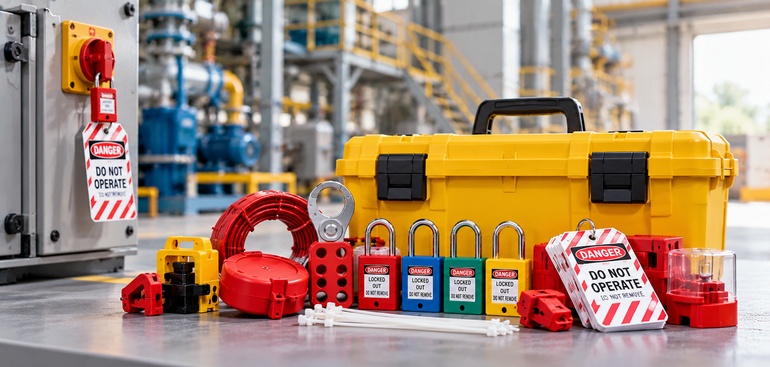
Depending on your requirements, the product range may include:
- Safety padlocks
- Circuit breaker lockouts
- Valve lockouts
- Electrical lockout devices
- Lockout hasps
- Cable lockouts
- Pneumatic lockouts
- Group lockout equipment
- Lockout stations
- Safety tags
- Lockout kits
A broad product range makes it easier to maintain a consistent LOTO system across different departments and facilities.
Consider Your Industry and Application
Before choosing a supplier, identify the types of hazardous energy present at your facility. These may include electrical, mechanical, hydraulic, pneumatic, thermal, chemical, or other stored energy.
For example, an electrical maintenance team may require circuit breaker lockouts and safety padlocks, while a processing facility may need valve lockouts, cable devices, tags, and group lockout solutions.
OSHA requires authorized employees to understand the type and magnitude of energy involved and the methods used to control it before applying energy-control procedures.
A good supplier should therefore be willing to understand your application rather than simply recommend its most popular products.
Evaluate Customization and OEM Capabilities
Large organizations and distributors may require customized LOTO products. Depending on the supplier, customization can include:
- Company branding
- Customized tags
- Product colors
- Packaging
- Product dimensions
- Keying options for safety padlocks
- Site-specific lockout kits
If you are purchasing in bulk, ask whether the supplier can maintain consistent specifications across repeated orders. This is especially important for multinational companies with multiple facilities.
Check Manufacturing Capacity and Quality Control
A supplier may offer attractive samples but struggle to maintain the same quality when production volumes increase. Before placing a large order, ask about the manufacturing process and quality-control system.
Useful questions include:
- Where are the products manufactured?
- What quality checks are performed?
- Are products tested before shipment?
- Can inspection reports be provided?
- What is the production capacity?
- Can the supplier maintain consistent specifications?
- What happens if a batch does not meet requirements?
These questions can help distinguish an established manufacturer from a trading company with limited control over production.
Compare Suppliers Before Making a Decision
Instead of selecting a supplier based solely on the lowest quotation, compare several important factors.
Factor | What to Check |
Product quality | Materials, construction and durability |
Compliance | Relevant standards and documentation |
Product range | Different energy isolation applications |
Customization | Branding, colors, packaging and specifications |
Manufacturing | Capacity and production consistency |
Quality control | Testing and inspection procedures |
Delivery | Lead times and international shipping capability |
Support | Technical assistance and after-sales service |
Pricing | Overall value rather than just unit cost |
This approach helps you evaluate the complete supplier relationship rather than just the initial purchase price.
Assess Worldwide Supply and Delivery Capabilities
For businesses purchasing internationally, logistics can be just as important as product quality. A reliable global supplier should have experience handling international orders and understand the documentation and packaging requirements involved in export shipments.
Ask about:
- Minimum order quantities
- Production lead times
- Packaging standards
- Shipping options
- Export documentation
- Bulk-order capacity
- Replacement orders
- Communication and support across time zones
Consistent communication is particularly useful when purchasing LOTO products for multiple locations.
Why Lukko Safety Can Be Your LOTO Partner
When selecting a lockout tagout manufacturer or supplier, businesses should look for a combination of product quality, practical safety solutions, customization, dependable supply, and responsive service.
Lukko Safety focuses on providing lockout/tagout solutions for industrial safety requirements and businesses operating across worldwide markets. By evaluating your application, required products, quantities, and specifications before purchase, you can build a LOTO procurement process that is better suited to your workplace.
Whether you need individual lockout devices, complete kits, customized products, or bulk requirements, choosing a supplier that understands hazardous energy control can make procurement more reliable and organized.
Final Thoughts
Selecting a reliable lockout tagout manufacturer or supplier requires more than comparing prices. Product durability, applicable standards, manufacturing quality, product variety, customization, documentation, delivery capabilities, and after-sales support should all be considered.
The right supplier can help you source suitable LOTO equipment for different machines and energy-isolation applications while supporting a consistent workplace safety program. Before placing an order, request product specifications, verify applicable compliance requirements, assess samples where appropriate, and discuss your exact application with the supplier.
For businesses looking for dependable LOTO solutions for domestic or international requirements, Lukko Safety can be considered as a trusted partner for sourcing lockout/tagout products designed around industrial safety needs.
Frequently Asked Questions
Look for product quality, relevant standards, durable materials, manufacturing capabilities, testing documentation, customization options, a broad product range, reliable delivery, and responsive customer support.
LOTO equipment forms part of a hazardous energy control program. Applicable requirements help ensure that devices are suitable for their intended purpose and provide effective isolation and warning during maintenance activities.
A comprehensive supplier may offer safety padlocks, valve lockouts, circuit breaker lockouts, hasps, cable lockouts, tags, lockout stations, pneumatic devices, and complete LOTO kits.
It depends on your requirements. A manufacturer may offer greater customization and direct production support, while a distributor may provide convenient access to multiple brands. For large or recurring orders, understanding the source of the products is particularly important.
Yes. Depending on the manufacturer, customization may include branding, colors, packaging, tags, keying systems, dimensions, and specially assembled lockout kits.
