
Electrical Panel Lockout: Step-by-Step Guide for Compliance

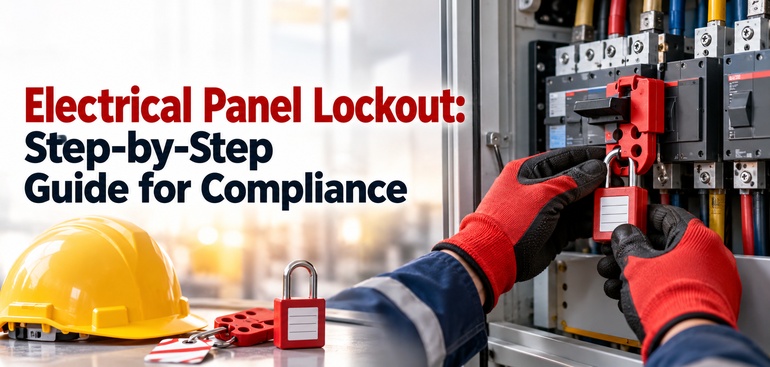
Electrical work requires more than technical knowledge. It also demands proper safety procedures that protect workers from unexpected energization, electrical shock, burns, and other workplace hazards. One of the most important practices is electrical panel lockout, which helps ensure that an electrical circuit or panel remains safely isolated while maintenance or repair work is being performed.
Following a proper lockout procedure is especially important in industrial facilities, commercial buildings, construction sites, and maintenance environments where multiple people may work around electrical equipment. A clear process helps prevent accidental activation and supports workplace safety compliance across different regions. In this guide, we explain the electrical panel lockout process step by step, common mistakes to avoid, and practical measures businesses can use to improve electrical safety with solutions from Lukko Safety.
What Is Electrical Panel Lockout?
Electrical panel lockout is a safety procedure used to prevent an electrical panel, breaker, or disconnecting device from being switched on while work is being carried out.
It is an important part of Lockout/Tagout (LOTO) procedures. Before maintenance begins, the authorized worker identifies the energy source, switches it off, isolates it, and applies an appropriate lockout device and warning tag.
The basic objective is simple: keep hazardous electrical energy isolated until the work is safely completed.
Why Is Electrical Panel Lockout Important?
Electrical energy can remain dangerous even when equipment appears to be switched off. Someone else may accidentally turn a breaker back on, or a circuit may be energized from an unexpected source.
A proper electrical panel lockout procedure helps:
- Prevent accidental energization
- Protect maintenance and electrical workers
- Reduce the risk of electric shock and arc-flash incidents
- Provide clear identification of equipment under maintenance
- Support workplace safety procedures
- Establish accountability among authorized workers
- Improve consistency in maintenance operations
For organizations operating across different countries, following recognized electrical safety and LOTO principles can also help create a consistent safety culture across multiple facilities.
Electrical Panel Lockout: Step-by-Step Procedure
A successful lockout procedure should be systematic. The exact requirements can vary depending on the workplace, equipment, and applicable regulations, but the following steps provide a practical framework.
1. Identify the Electrical Energy Source
Before starting work, determine exactly which panel, circuit, breaker, or disconnect controls the equipment.
Review electrical drawings, labels, equipment documentation, and site procedures where applicable. Do not rely only on assumptions or incomplete labels.
If multiple energy sources are involved, each source must be identified and addressed.
2. Notify Affected Employees
Inform employees who operate, use, or work near the equipment that it will be taken out of service.
The notification should explain that maintenance is being performed and that the equipment must not be operated until the lockout procedure has been completed.
Clear communication is an essential part of preventing accidental interference.
3. Shut Down the Equipment
Follow the normal shutdown procedure for the equipment or electrical system.
Turn off operating controls before isolating the electrical supply. This can help reduce the possibility of equipment movement or other unexpected conditions when the main energy source is disconnected.
4. Isolate the Electrical Supply
Locate the correct disconnecting device, circuit breaker, or isolator and switch it to the appropriate OFF position.
Where required, additional isolation points should also be secured. Always verify that the selected isolation point actually controls the equipment being serviced.
5. Apply the Lockout Device
Install a suitable lockout device to prevent the disconnecting device from being operated.
For electrical panels, this may involve a breaker lockout, panel lockout, disconnect lockout, or another device designed for the specific equipment.
The lockout device should be compatible with the panel or breaker and strong enough to prevent unauthorized operation.
6. Attach a Warning Tag
Attach a clearly visible tag identifying the lockout.
A good tag can communicate important information such as:
- Name of the authorized worker
- Date and time of lockout
- Reason for maintenance
- Relevant warning information
The tag should remain visible and should not be removed casually.
7. Release or Control Stored Energy
Turning off an electrical supply does not always mean that all hazardous energy has disappeared.
Depending on the equipment, stored electrical energy may remain in capacitors or other components. Other forms of energy, such as mechanical, hydraulic, or pneumatic energy, may also be present in connected equipment.
Follow the equipment-specific procedure for safely releasing or controlling stored energy.
8. Verify Isolation
This is one of the most important steps in the entire procedure.
The authorized worker should verify that the equipment is actually de-energized using an appropriate testing method and suitable test equipment. The test equipment itself should be checked according to the applicable safety procedure.
Never assume that a breaker being in the OFF position automatically means the equipment is safe to work on.
9. Perform the Maintenance Work
Once isolation has been properly established and verified, the authorized worker can begin the required maintenance or repair.
Keep the lockout and tag in place throughout the work. If the job changes or additional energy sources are identified, stop and reassess the isolation procedure before continuing.
10. Remove the Lockout Safely
After the work is complete, inspect the area and make sure tools, temporary connections, and other materials have been removed.
Confirm that workers are in a safe position before restoring power. The authorized worker who applied the lock should normally remove their own lock according to the site's established procedure.
Finally, notify affected employees before the equipment is returned to service.
Common Electrical Panel Lockout Mistakes to Avoid
Even a written LOTO procedure can fail when basic steps are skipped. Common mistakes include:
Common Mistake | Why It Is a Problem |
Locking the wrong breaker | The equipment may remain energized |
Using an unsuitable lockout device | The isolation may not remain secure |
Skipping verification | Workers may unknowingly work on live equipment |
Removing another person's lock without authorization | Creates serious safety and accountability risks |
Failing to identify multiple energy sources | Hidden energy may remain hazardous |
Poor employee communication | Someone may attempt to restart equipment |
Reusing damaged lockout equipment | The device may not provide reliable protection |
Regular training and workplace inspections can help identify these weaknesses before they contribute to an incident.
Choosing the Right Electrical Lockout Equipment
The right lockout equipment depends on the electrical system and the type of isolation device being secured.
Common solutions may include:
- Circuit breaker lockouts
- Electrical panel lockouts
- Plug lockout devices
- Disconnect switch lockouts
- Lockout hasps
- Safety padlocks
- Warning tags
- Lockout kits
When selecting equipment, consider compatibility, durability, visibility, ease of application, and the requirements of your workplace safety program.
Lukko Safety provides safety-focused lockout solutions designed to help organizations establish practical and reliable energy isolation procedures for different work environments.
How to Improve Electrical Lockout Compliance
Compliance should not be treated as a one-time activity. Organizations can strengthen their LOTO programs by:
- Creating clear written procedures for each relevant machine or electrical system.
- Training authorized and affected employees according to their responsibilities.
- Inspecting lockout equipment regularly for damage or wear.
- Keeping electrical panels properly labeled.
- Reviewing procedures whenever equipment or processes change.
- Conducting periodic audits and identifying gaps.
- Keeping suitable lockout devices easily accessible to authorized workers.
A well-organized program makes the correct safety procedure easier to follow during real maintenance situations.
Conclusion
Electrical panel lockout is a fundamental part of safe electrical maintenance. From identifying the energy source and notifying employees to applying the correct lockout device and verifying isolation, every step has an important purpose. Skipping even one stage can increase the risk of accidental energization and injury.
Businesses should develop procedures that match their equipment, workplace risks, and applicable safety requirements. With suitable training and reliable lockout equipment, organizations can create a safer and more consistent maintenance environment. Lukko Safety offers practical lockout solutions to support electrical safety programs for workplaces worldwide.
Frequently Asked Questions
Electrical panel lockout is a safety procedure that prevents an electrical breaker, disconnect, or panel from being operated while maintenance is underway. It helps keep the energy source isolated until authorized work is completed and the equipment is safely returned to service.
Yes. Electrical panel lockout is commonly performed as part of a broader Lockout/Tagout (LOTO) program. LOTO procedures are designed to control hazardous energy during servicing, maintenance, repair, and other activities where unexpected energization could create a risk.
Verification confirms that the intended energy source has actually been isolated. A breaker may appear to be off while another source, wiring issue, or stored energy condition could still create a hazard. Proper testing helps confirm that the equipment is safe to work on.
Depending on the installation, workers may use breaker lockouts, panel lockouts, disconnect lockouts, safety padlocks, lockout hasps, tags, and complete lockout kits. The device should be selected according to the specific electrical equipment and workplace procedure.
Electrical lockout should be performed by properly trained and authorized workers who understand the equipment, hazardous energy sources, isolation points, and applicable workplace procedures. Responsibilities should be clearly defined within the organization’s LOTO program.
