
Smart Lockout / Digital LOTO: Is Your Facility Ready for IoT-Based Safety?

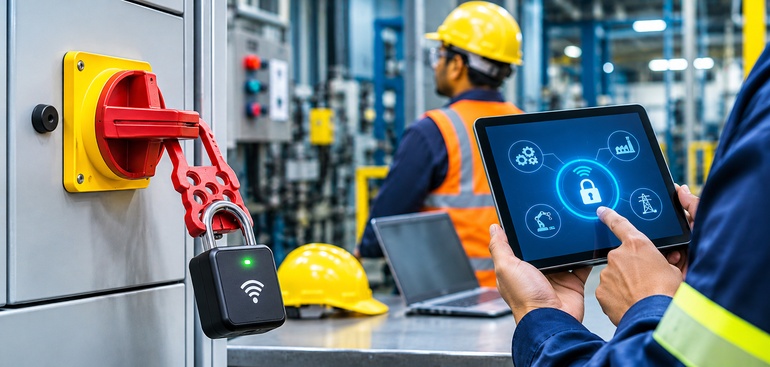
Industrial safety is changing as facilities become more connected. Machines, sensors, maintenance systems, and production equipment can now share information in real time. Yet one critical area is often still managed through paper forms, manual checks, and traditional padlocks: Lockout/Tagout (LOTO).
Smart Lockout and Digital LOTO bring connected technology into energy-isolation procedures. These systems can help facilities improve visibility, accountability, documentation, and communication while reducing dependence on manual records. However, going digital does not mean removing the physical safety controls that protect workers.
For facilities considering connected safety solutions, the real question is not simply whether Digital LOTO is available. It is whether the facility has the infrastructure, procedures, people, and safety culture needed to use it effectively. This guide explores what Smart Lockout means, how IoT can support LOTO, and how to determine whether your facility is ready.
What Is Smart Lockout or Digital LOTO?
Lockout/Tagout is a safety procedure used to control hazardous energy before maintenance, repair, inspection, or servicing work begins. Traditional LOTO relies on physical locks, tags, isolation devices, documented procedures, and trained workers.
Digital LOTO adds a technology layer to this process. Instead of relying entirely on paper records and manual communication, a digital system can manage procedures, authorisations, worker participation, verification, notifications, and audit records electronically.
Smart Lockout can take this further by connecting physical locking devices with software, mobile applications, Bluetooth, QR codes, sensors, or other IoT technologies.
The important point is that technology supports the LOTO process rather than replacing fundamental energy-isolation principles. Recent industry guidance also stresses that digital systems do not automatically replace physical isolation controls or established safety procedures.
How Does IoT-Based Safety Change LOTO?
An IoT-based safety approach allows information from connected devices and workers to move through a central digital system.
For example, a maintenance technician may scan a QR code on a machine to access the correct isolation procedure. The system can guide the technician through required steps, record completion, and provide authorised personnel with visibility of the lockout status.
Depending on the system, connected LOTO may provide:
- Digital isolation procedures
- Worker identification and authorisation
- QR or barcode-based equipment identification
- Smart padlock connectivity
- Mobile access to safety instructions
- Real-time status visibility
- Automated notifications
- Digital photographs and verification records
- Timestamped audit trails
- Centralised LOTO documentation
Modern Digital LOTO platforms increasingly focus on capturing evidence during the actual job rather than reconstructing records afterward.
Key Benefits of Smart Lockout for Industrial Facilities
1. Better Visibility
With conventional paperwork, supervisors may need to physically check boards, forms, or logs to understand which equipment is under lockout.
A connected system can provide a clearer picture of active lockouts, involved workers, and procedure status from a central interface.
2. Improved Accountability
Digital records can show who initiated a procedure, who participated, which steps were completed, and when actions occurred.
This creates a more structured record of responsibility and can help safety teams identify gaps in the LOTO process.
3. Faster Access to Procedures
Workers do not always have convenient access to the latest paper procedure. Digital systems can make approved instructions available through smartphones or tablets, sometimes by scanning an equipment QR code.
This can reduce time spent searching for documents and help workers follow the correct procedure for the equipment involved.
4. Stronger Audit Readiness
A good Digital LOTO system can automatically maintain records such as timestamps, worker actions, verification steps, photographs, approvals, and lock status.
Instead of collecting paperwork before an audit, safety teams can retrieve organised records from the system.
5. Real-Time Notifications
Connected systems can help communicate changes in lock status or important events to authorised personnel. This can be particularly useful in large facilities where maintenance teams and supervisors may work in different areas.
Connected LOTO solutions are increasingly designed around real-time visibility and accountability rather than simply replacing paper forms.
Is Your Facility Ready for Digital LOTO?
Before investing in Smart Lockout technology, evaluate your current safety environment.
Start With Your Existing LOTO Process
Ask:
- Are all hazardous energy sources clearly identified?
- Are isolation procedures documented and regularly reviewed?
- Do authorised employees receive appropriate training?
- Are verification steps consistently completed?
- Can supervisors quickly identify active lockouts?
- Are records accurate and easy to retrieve?
- Do shift changes create communication difficulties?
- Are multiple workers sometimes involved in the same lockout?
If several answers reveal weaknesses, digitising the process alone may not solve the problem. Your facility may need to strengthen its underlying LOTO program first.
Technology and Infrastructure Readiness
Smart Lockout also requires suitable technical infrastructure.
Consider whether your facility has:
- Reliable mobile or wireless connectivity where required
- Compatible smartphones, tablets, or handheld devices
- Appropriate smart locks or connected isolation hardware
- A system for managing employee identities and permissions
- Cybersecurity controls
- Battery and device-maintenance procedures
- Integration capability with existing maintenance or permit systems
- Staff who can manage and support the technology
IoT-based safety becomes more useful when connected devices, software, workers, and existing operational systems can work together instead of creating another isolated platform.
People Are Still the Most Important Part
Technology cannot replace competent workers or a strong safety culture.
Employees must understand why LOTO is necessary and how the digital system fits into established safety procedures. Training should cover both the traditional principles of hazardous-energy control and the practical use of the technology.
Facilities should also plan for situations such as:
- Lost or damaged mobile devices
- Low battery
- Connectivity failure
- Smart lock malfunction
- Incorrect user permissions
- Emergency situations
- System downtime
A clear fallback procedure is essential. Safety should never depend entirely on a network connection or software interface.
Smart Lockout vs Traditional LOTO
Area | Traditional LOTO | Smart/Digital LOTO |
Procedures | Paper/manual documents | Digital, guided procedures |
Status visibility | Often manual | Potentially real-time |
Records | Paper forms/logs | Digital audit trail |
Worker tracking | Manual sign-in | Digital identification/sign-on |
Notifications | Phone/radio/manual | Automated where supported |
Equipment identification | Manual | QR/barcode/digital identification |
Data analysis | Time-consuming | Easier through structured records |
Physical isolation | Physical devices | Physical controls plus connected technology |
The goal is not to make traditional safety controls obsolete. Instead, Smart Lockout can make the surrounding process more connected, traceable, and manageable.
A Practical Roadmap to Digital LOTO
Facilities do not necessarily need to transform everything at once. A phased approach can make implementation easier.
Step 1: Audit Your Current LOTO Program
Identify procedural, documentation, communication, and compliance gaps.
Step 2: Map Energy-Isolation Points
Create an accurate inventory of equipment, energy sources, isolation points, and existing LOTO procedures.
Step 3: Identify the Right Technology
Evaluate smart locks, mobile applications, digital procedures, sensors, communication tools, and software integrations according to your facility's actual requirements.
Step 4: Run a Pilot
Choose a manageable area or group of machines. Test the system with maintenance, operations, and safety teams before expanding.
Step 5: Train Employees
Provide practical training covering both the technology and the underlying LOTO process.
Step 6: Measure Performance
Track indicators such as procedure completion, overdue records, verification quality, training status, lockout duration, and recurring process gaps.
Step 7: Scale Carefully
After resolving issues from the pilot, expand the system across additional equipment, departments, or facilities.
Why Smart Lockout Matters for the Future of Industrial Safety
Industrial facilities are becoming increasingly connected. Maintenance management, machine monitoring, predictive maintenance, and production systems are already moving toward real-time information. LOTO should not be isolated from this transformation.
Digitised LOTO can help bring safety information closer to the people performing maintenance work. It can make procedures easier to access, records easier to review, and lockout status easier to understand.
At the same time, facilities should avoid treating Digital LOTO as a simple software purchase. Successful implementation requires sound procedures, appropriate hardware, trained employees, reliable infrastructure, cybersecurity, and management commitment.
For organisations exploring this transition, Lukko Safety can be part of the conversation around modernising workplace safety through smarter lockout solutions. Whether your facility is beginning its digital journey or looking to improve an existing LOTO program, the right approach should always place worker protection first.
Conclusion
Smart Lockout / Digital LOTO represents an important step toward more connected industrial safety. By combining established energy-control practices with digital workflows, connected devices, real-time information, and structured records, facilities can improve visibility and accountability across maintenance operations.
But readiness starts before the technology is installed. A facility should first understand its existing LOTO process, identify gaps, prepare its workforce, assess its infrastructure, and establish clear procedures for technology failures.
If your organisation is considering an IoT-based approach to safety, now is a good time to evaluate where your current LOTO program stands and where Smart Lockout could add practical value. Connect with Lukko Safety to explore smarter, more organised approaches to modern lockout safety for facilities worldwide.
Frequently Asked Questions
Digital LOTO uses software and connected technologies to manage Lockout/Tagout activities electronically. It can support procedures, worker authorisation, verification, notifications, documentation, and audit records while maintaining the physical controls required for hazardous-energy isolation.
Not automatically. Digital tools can improve the management and visibility of LOTO, but software, RFID, or a dashboard alone does not physically isolate hazardous energy. Physical isolation requirements must continue to be addressed according to applicable safety procedures and regulations.
IoT can connect smart locks, mobile devices, software, and other equipment to provide information about lock status, worker actions, isolation activities, and notifications. This can improve communication and visibility during maintenance work.
Yes. Digital LOTO can be particularly useful in complex facilities with many machines, maintenance teams, contractors, multiple isolation points, or group lockout activities. The exact solution should be selected according to the facility’s operational and safety requirements.
Requirements vary by system. They may include smart padlocks or connected isolation devices, mobile phones or tablets, software, QR or barcode identification, network connectivity, and appropriate user-access controls.
